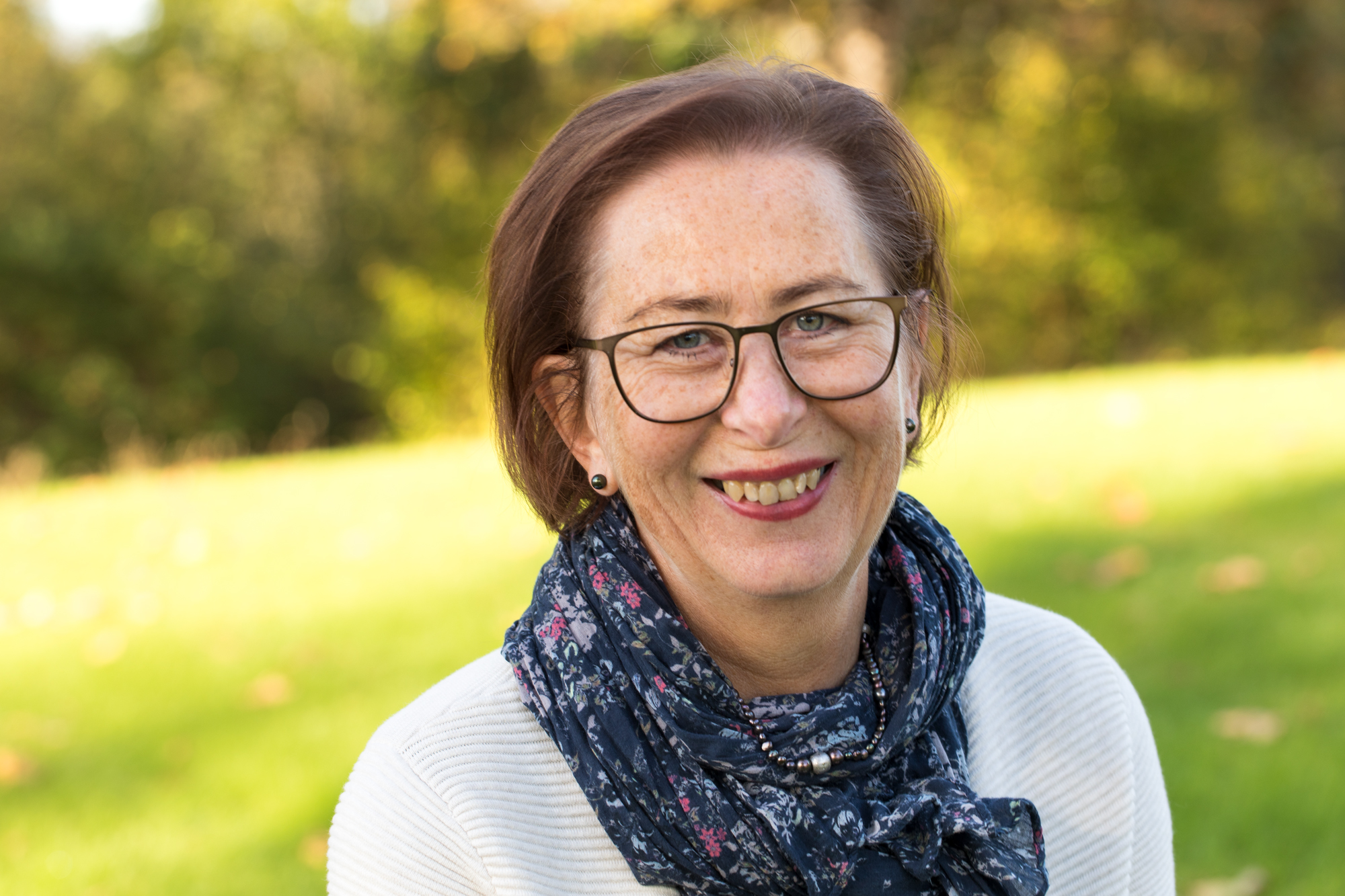
Margareta Hammarlund-Udenaes
Meditation teacher in Acem. Pharmacist and professor of pharmacokinetics.
Margareta Hammarlund-Udenaes presents a research-based perspective on why it may be more fruitful to let spontaneous thoughts be there.
The value of meditation is a given these days. But what does research show regarding how to meditate? In our minds, there is a constant struggle between many thoughts and the wish to calm them down. Some meditation techniques strive to actively dampen thoughts. In this presentation, Margareta Hammarlund-Udenaes shows why it may be more fruitful to let thoughts be there.
Margareta Hammarlund-Udenaes is a meditation teacher in Acem, pharmacist and professor of pharmacokinetics.
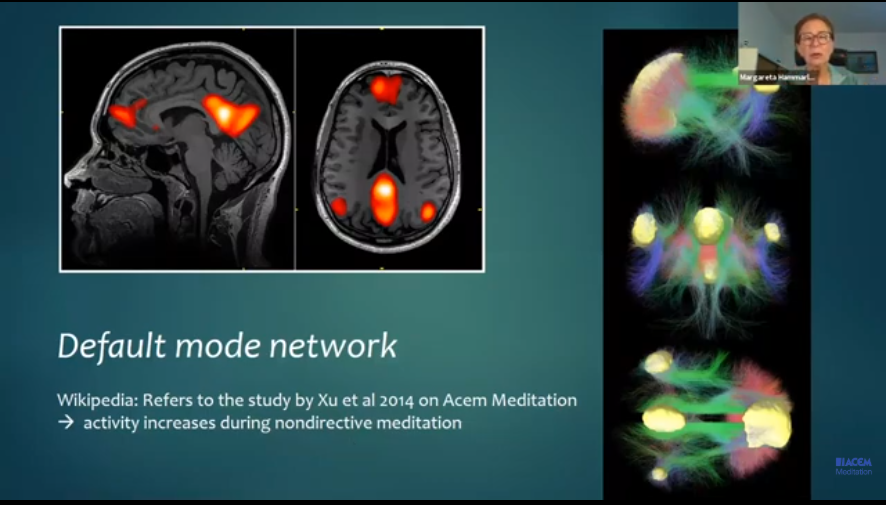
The webinar presents spontaneous mind wandering as part of the meditative process, not merely as a disturbance. In the visible slides, mind wandering is described as filling several roles: it comforts, processes difficult feelings, helps us shift perspective when we get stuck, interprets memories from the past, contributes to increased self-awareness, stimulates empathy and creativity, and prepares us for new challenges.
One of the slides points to the default mode network and refers to research on Acem Meditation by Xu et al. 2014, where activity increases during nondirective meditation. The practical point is simple: meditation is not necessarily improved by fighting thoughts harder. In Acem Meditation, the free mental attitude gives thoughts room to come and go.
Meditation teacher in Acem. Pharmacist and professor of pharmacokinetics.