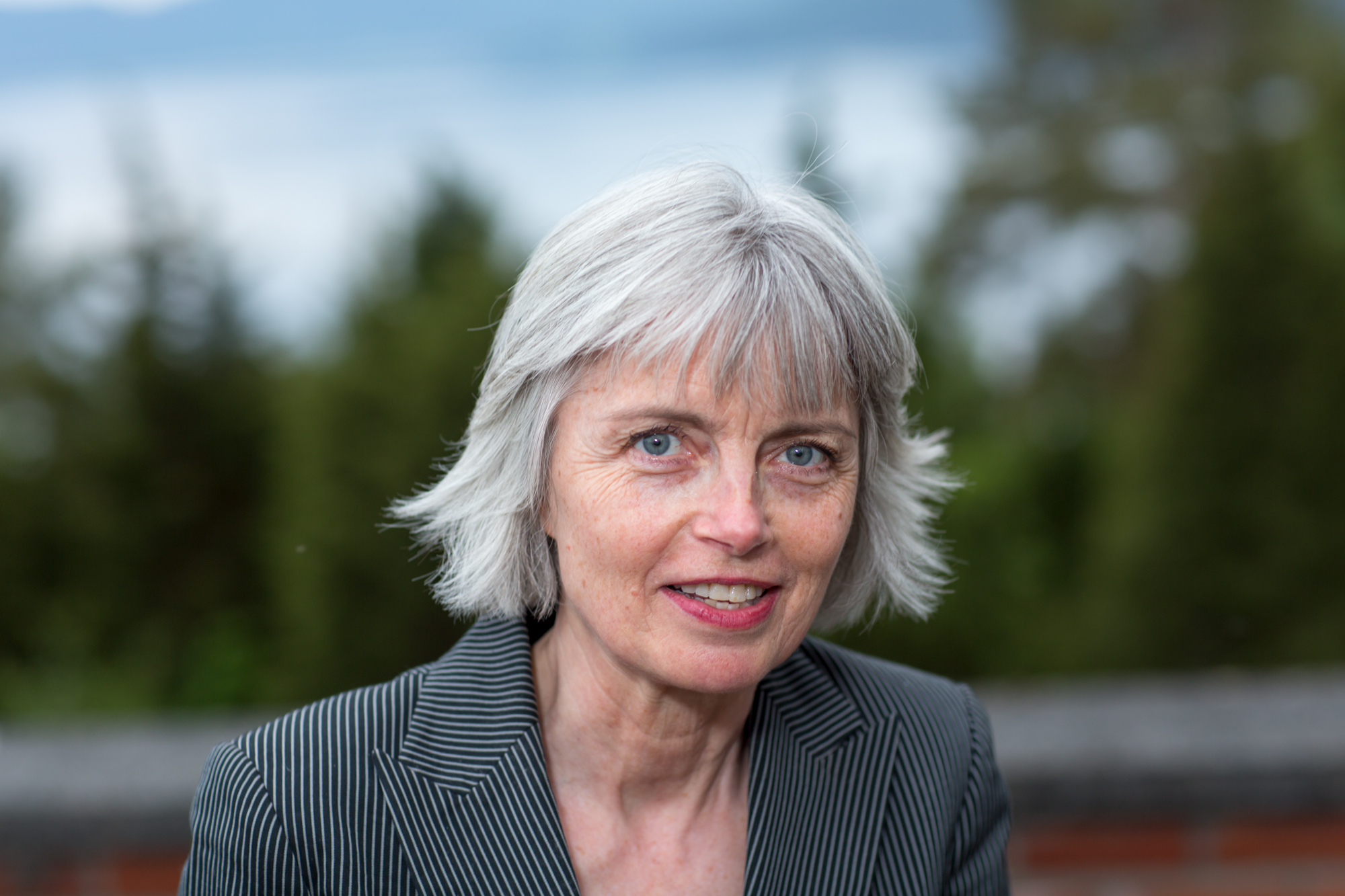
Sigrun Hobbel
Sigrun Hobbel is an Acem Meditation initiator and used to work as a high school teacher. She has a master in Nordic languages and literatures.

For some, a daily meditation rhythm falls naturally into place almost from the time they learn Acem Meditation; they sit down and meditate when they have planned to. It is something they want and easily manage.
For others, it is not like that. Eline and Johan are two of them. They want to, but do not quite manage it.
Eline is in her twenties. It is not long since she learned to meditate. In recent years, Eline has felt quite weighed down by grief after several deaths among those closest to her. This was also the background for her thinking for a long time that she wanted to learn Acem Meditation.
In Eline's meditation, memories, images and tears come easily. The illness of a close relative, which over several years wore down the body until there was nothing more to draw on. And then the young friend who suddenly chose to die. The shock. The pain. The tears. It seeps on in meditation, lets more come forward. Eline wants to relate to it, because for several years there has at times been a heavy mood. Meditation helps.
At the same time, almost every time she meditates she experiences that the tears come. Everything comes closer. It is good to let the tears come, while it is also hard to feel the grief and pain. And Eline is somewhat unsettled by the way it stays with her after meditation. It is not just fine to start the day by being more grief-filled while she is also supposed to be ready in the morning and mobilised for work and the rest of the day.
Often when Eline is about to sit down to meditate, something holds back and pulls in the opposite direction. Away from the tears. Away from the pain. Today - shall, shall not? Often it becomes not. So far, Eline has not established a more regular meditation rhythm. She has not quite figured out this feeling that she both wants to and does not want to. She has not let go of meditation, but neither has she found out how to land this in everyday life.
Johan is in his mid-forties and has meditated for nine years. He goes on retreats from time to time - appreciates the long meditations and the discussion afterwards in the guidance group. He says meditation makes him more whole, helps him "land" as well as possible and cope with everyday life with work and family, and his own baggage from early in life. That is why he has held on to meditation. At the same time, he has always meditated more sporadically, not found his way to a steady meditation routine that he follows. This can irritate him, because something in him wants him to meditate more.
On closer discussion, his inner dialogue is roughly like this: I wish it were easier to establish a more regular rhythm; surely I should be able to manage that. In the morning? I could meditate at work, before the morning meeting. I arrive early at work because I have to take the children to school. But then it is very nice to meet colleagues and chat about this and that. In the afternoon? With the children and spouse and dinner, that is not so simple. In the evening? Yes, when it has not happened during the day, it usually becomes in the evening. But that is a little unfortunate, because my wife may be sitting waiting for me so we can watch a film together; that is nice. I also want to be with her, just the two of us.
In one way, Johan's motivation is quite low: I do not have time; there is so much else I have to take care of. On another level, his motivation is high: this is something I want; I feel that meditation is too important to let go of. Why does it turn out like this?
Johan wants to, and manages some of what he wants, even though his own counterforces against sitting down and meditating are clear. Meditation touches a deeper inner restlessness that he feels he has within him. It is often both good and painful to meditate.
For many, it is not a given to manage to meditate daily, even though something in them wants it. The reasons are complex. Something in one's own inner life puts obstacles in the way. The puzzle does not quite fit together. Inner dialogue and impulses are activated, with reasons in both directions. Shall, shall not? When does it become Shall, and when Shall not? Perhaps there are life traumas that are hard to let in and feel, perhaps one feels that one's own time puzzle does not fit together the way one wants.
Sometimes the expectations of oneself may also be too great, all or nothing, such as meditating twice every day, even though one sees that in practice this is not how it turns out. Then it is important to be realistic: what can one manage reasonably well in certain periods, and find compromises one can reconcile oneself with. Good enough, setting somewhat simpler goals? For those who have recently learned meditation, one must also find one's way to a new habit that is to be fitted into everyday life; then it is okay to set the bar at a level that is reasonably feasible.
Each individual meditation gives deeper relaxation, even if it does not always feel that way. But the process aspect - that something within oneself is moving over time - requires a steadier rhythm. If one then gets to meditate, for example, three to five times a week, even if it is 15 minutes and not 30 or 45, this helps maintain a process aspect, which is central here. We touch our own life themes - who we are and how we meet the world.
This does not mean that the spontaneous activities - thoughts, moods, impressions that play themselves out - feel "deep". The content may often carry the everyday, the close-at-hand. But in addition, they have points of contact with deeper sides of us, which can make it both good and painful to let more in. Keeping it away, and not letting it in, also takes energy in everyday life. Letting it in frees more energy in the somewhat longer term, even though it may hurt in periods. Being able to talk about one's own meditation process in groups also helps clarify and makes it easier to get over any thresholds one may meet along the way. Meditation gives possibilities.
Sigrun Hobbel
Sigrun Hobbel is an Acem Meditation initiator and used to work as a high school teacher. She has a master in Nordic languages and literatures.