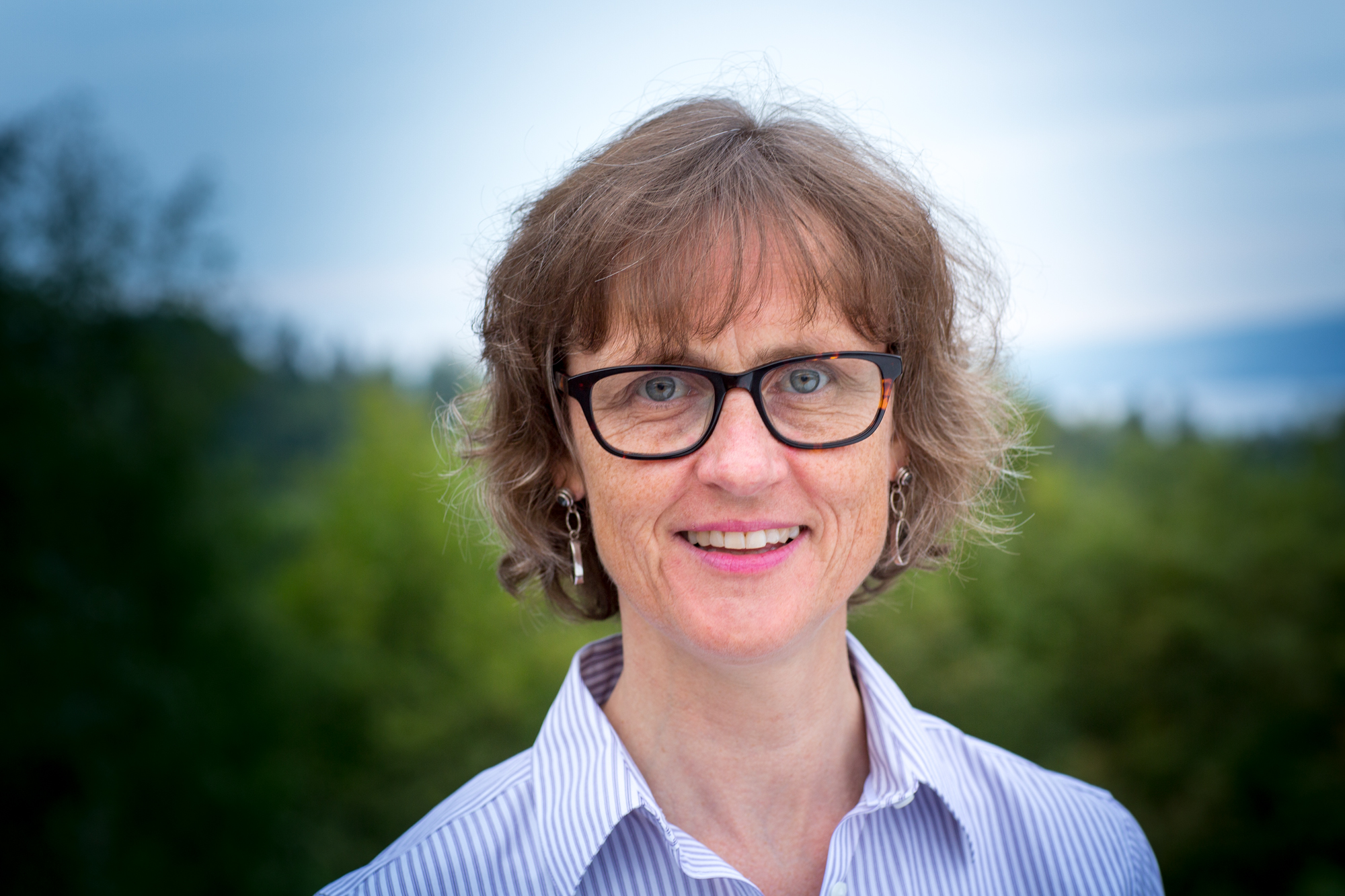
Ellen Gravklev
Acem Meditation Initiator. Senior Adviser for the University of Oslo.

"Life is what happens to you, while you're busy making other plans"
John Lennon.
The quote may be an inspiration to seize life, as opposed to letting it be something that merely happens.
We live life as best we can, with ups and downs, joys and sorrows. One day easily follows another, and time flies. We keep up and try to make the best of it, in an unsettled and unpredictable time.
Many people have more than enough on their hands, and it is not unusual to walk around with a feeling of not managing to do what we think we should or must do. We may sense an undertone of not being fully present in our own life, while the stream of news and updates on social media easily catches us.
When meeting the challenges of everyday life, some like to plan, while others take things more as they come. Some push themselves, others withdraw when things are stormy around them, and keep some distance. Some seem to have a kind of calm regardless.
We relate to friends, family and colleagues in different ways. Closely, a little at a distance, by holding on, perhaps too tightly. Friendship and contact with family may also be more fleeting, tend to become sporadic, or easily slip away.
These are patterns that are characteristic of us and tend to repeat themselves, for better and worse. They are closely connected with our personality.
If one practices Acem Meditation, one may ask whether there can be a connection between the way we meet the challenges of everyday life and how we repeat the meditation sound when we meditate.
When meditation meets resistance, we often tend unconsciously to ally ourselves with forces that want to close and hold back. We act accordingly, with tunnel vision and a narrowed range of action, in meditation as in life otherwise. In periods with streams of thoughts, restlessness, boredom or pain, we may lose some of the openness, often without noticing it.
When we meditate for one and a half hours or more, body and mind relax especially well and we reach a deeper immersion than in our everyday meditations. We open up more, let more in and process, and at the same time may become more aware of how we repeat the meditation sound when meeting different kinds of spontaneous activity.
In guidance afterwards, the guide typically asks: “How do you repeat the meditation sound when you have many thoughts, are restless or have pain in your back?” I repeat it as I usually do, we may answer, or in the way I learned on the course.
We do as before; it is what comes naturally to us, we see no other possibilities there and then, and we maintain a characteristic pattern.
In long meditations and guidance, we can bring in a new, more open perspective, which enables us to notice nuances and the possibility of repeating the sound in a slightly different way. Some of the routine quality lets go.
There are many ways in which we can repeat the meditation sound. Quickly, slowly, together with the breath, lightly, with the sound at the center of attention, or in the periphery. Firmly, vaguely, with a certain pressure. We may say it, listen to it, think it.
When there is friction, forces are often at work that make us meditate with less openness. By gradually discovering this and adjusting the repetition in the direction of more acceptance, more openness, the charge will diminish.
With increased contact inwardly, a form of inner security may grow. An existential standpoint from which we live, act and make choices. It may make it easier to distinguish what is important from what is unimportant, and may mean that the time pressure no longer tightens quite as hard, while you are also more content.
With regular meditation over time, a portion of patience and trust in the process, by practicing Acem Meditation we may give ourselves the possibility of being more present in our own life.
Ellen Gravklev
Acem Meditation Initiator. Senior Adviser for the University of Oslo.