Carl Henrik Grøndahl
Acem Meditation Initiator. Artist Director, Radio Drama, Norwegian Broadcasting Corporation.
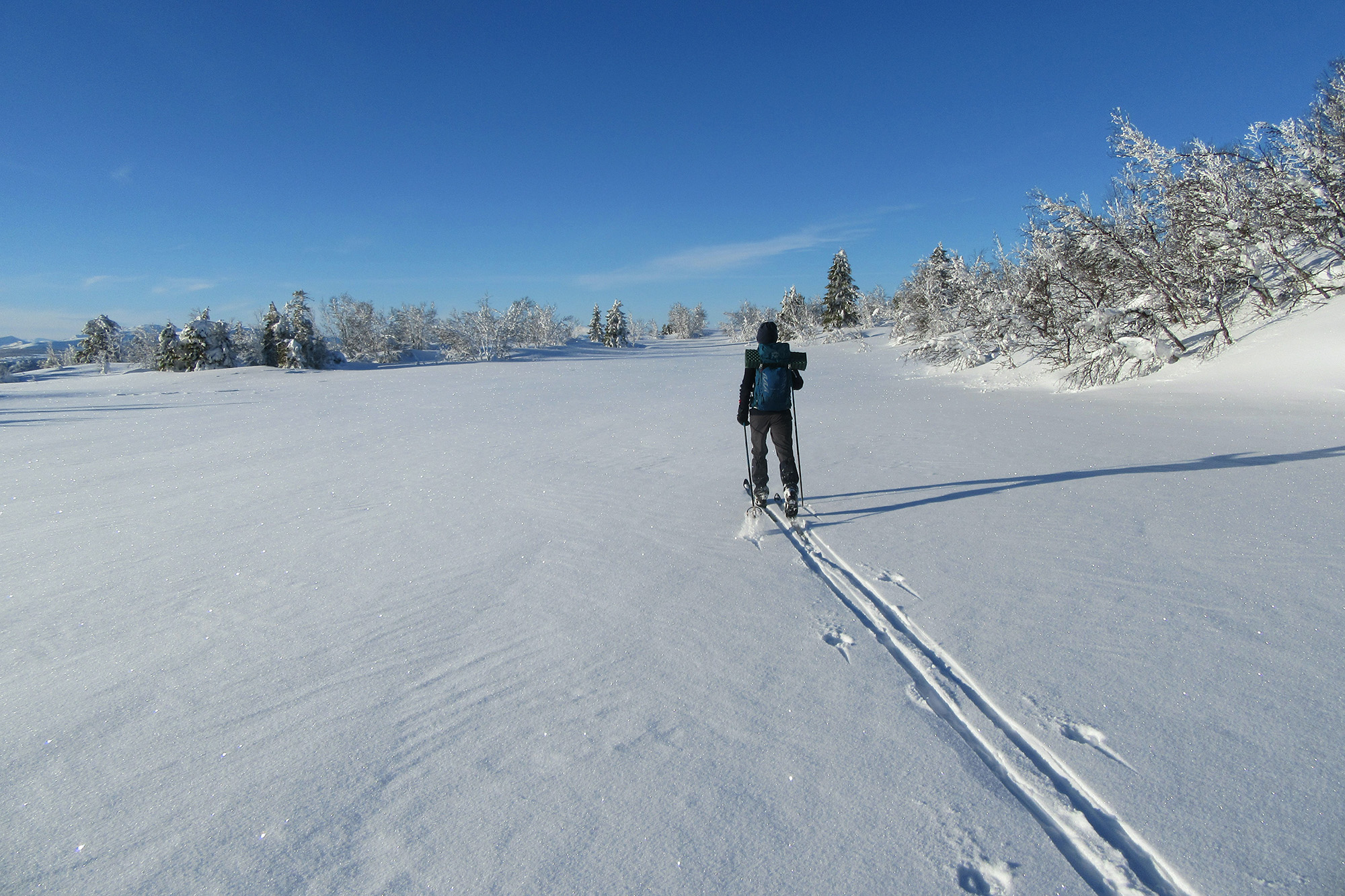
Skiing across the mountain plateau. A gale has blown the snow into crooked mountain birches and carved out sculptures - witches and trolls, the huldra and the whole Wild Hunt. Now the skis glide in sun through powder snow.
A kilometer away, skiers dressed for the woods are poling along in machine-made tracks. They let the machine, not nature, decide where the trip should go. They glide along only where the snow is packed and set in tracks. And suddenly I am struck by what a medical student says in this issue of the Acem magazine:
"Meditation contributes to a larger horizon in everyday life. I get to think more about what kind of life I want to live. What is it meaningful to spend time on?"
Meaningful? Trudging along on skis in heavy deep snow can wear away the joy of the trip. Prepared tracks give grip uphill and better speed downhill. You can go by technique. But then he also says this:
"Meditation makes me think about things I otherwise would not have thought about, and it helps me reflect on different aspects of existence."
Go outside the prepared tracks, perhaps? These skiers dressed for forest trails who glide through the tramlines in the snow and need to get through the day's kilometers, do they not feel the pull of the plateau? Do they not want to try themselves outside the prepared tracks, when the skis sink only three centimeters into the powder snow? Discover that they can go everywhere? That they do not need to let huge trail machines decide what they are to see and experience? Get to places they have never been before? Explore the odd hollow or go up the little peak? Get close to the snowy owl sitting on the huldra's head?
Be in contact with the snow as wind and weather have shaped it, not as heavy machines have packed it together and made it mechanical, industrial. Be in nature, not let the track setter decide which direction your life should take.
Yes, perhaps it is the experiences from the repetition of the meditation sound that follow you on skis. You can sit down in your armchair and let your thoughts wander. For the most part they follow familiar tracks. But then you bring in the meditation sound, openly, wonderingly, freely. And you are out of the tracks. Out in open terrain, where you receive what comes to you. Making your way in heavy conditions, struggling with herringbone steps in deep snow, feeling the headwind ruffle you, coming onto crust, skating with pure joy, seeing the snow sparkle around you, taking in how the wind shapes patterns in the snow, sensing nature's weight and silence. It is you, and you are it.
And perhaps you think that culture is the opposite of nature. Culture is everything we humans do and create and arrange in order to survive and live together in a nature that is mercilessly powerful, brutal, meaningless, nourishing and beautiful. To light a fire is culture. To shovel snow is culture. To plant a seed is culture. To try to understand nature is culture. A child is born nature and is shaped by culture. But there is always discomfort in this culture, because it must tame the nature in us, our drives, so that we can endure living with one another.
The inhibition of our drives creates residues. Neuroses, Sigmund Freud called them. We are not always so easy to deal with. Hell is other people, some say. Trail machines are hell, the worshippers of nature say, because they drag culture into nature and give skiers blinders. They do not follow the hare tracks, do not see how the grouse land in the snow. They are only annoyed that snow has blown into the ski tracks. And send irritated complaints to the trail groomers.
The repetition of the meditation sound is culture. But unlike many other cultural measures, it does not lock understanding. It does not arrange existence into truths, ideologies, dogmas. Into prepared tracks. "Meditation makes me think about things I otherwise would not have thought about, and it helps me reflect on different aspects of existence." The openness in the repetition lets the culture-shaped nature in us be what it is. Meet what we otherwise would not have been open to meeting. Lets us glide into terrain that is both known and unknown. Where the creative silence of existence can reach us.
Carl Henrik Grøndahl
Acem Meditation Initiator. Artist Director, Radio Drama, Norwegian Broadcasting Corporation.